
Whitney’s Words
Ever since starting this position, I’ve been having the same conversation with myself -- ‘What’s the difference between a boss and a leader?’ I’ve researched this question on various social media platforms. I’ve listened to podcasts and read articles and books on the subject. We know there’s a difference but sometimes it can be hard to explain. I watch my 8 year-old tell her 5 year-old sister to ‘help’ her clean their room by standing in the room and telling her how to clean their room and I know that that’s being a boss. I know that if she were to join in on the cleaning and help her 5 year-old by creating a plan with her to get their room cleaned, that would be leadership. But what does that look like in a position as the Director of a Hillel?
In this week’s parsha, Yitro, (Exodus 18:1–20:23), a lot happens that changes the course of our path as a Jewish people. The Children of Israel camp in front of Mount Sinai. Upon hearing the covenant, the Israelites respond, "All that God has spoken we will do." (19:1-8). After three days of preparation, the Israelites encounter God at Mount Sinai. (19:9-25), which is then followed by God giving the Ten Commandments aloud directly to the people. (20:1-14). The sometimes overlooked aspect of this week’s parsha occurs at the beginning of it -- when Jethro, Moses’s father-in-law, after hearing of the miracles that God has performed on behalf of the Israelites, travels to the Israelite camp to meet with Moses. What he finds is an overwhelmed and exhausted (and perhaps reluctant) leader struggling with the responsibility of being chosen to lead. I have to imagine at some point in Moses’s journey he must have thought to himself, “Why me? I did not sign up for this?” In any event, Jethro sees the immense toll that being the appointed leader of the Jewish people is taking on Moses and advises him to, essentially, delegate. It’s like my best friend said to me this week, “Whit, you can’t pour from an empty cup.” Essentially, how can you truly care for your people if you are not caring for yourself? Taking on the leadership of an entire population of people--being responsible for hearing their trials and tribulations all by himself----is a little much. And so, in the style of true leadership, Moses listens carefully to Jethro's wise advice and does not hesitate to integrate and incorporate that advice into the manner in which he leads. This is evident in Moses’s decision to establish judges -- judges who will be in charge of smaller groups of people, and then if those judges don't know the answers, they will go to the higher judges in charge of larger groups, and if those don't know, they'll go to the higher level judges, all the way up, until it reaches Moses. In this interaction between Jethro (a seasoned leader and caring family member) and Moses (a newly appointed leader in the beginning of his career), we see not only the leadership of humility and putting ego aside as demonstrated by Moses when he takes his father-in-law’s advice to heart, but we also see leadership in the way Jethro lovingly asks questions and emparts thoughtful feedback to Moses rather than giving unhelpful, ego-driven criticisms.
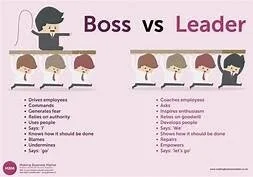
Certainly, who we are as leaders is shaped by the leadership we witness around ourselves. I’m blessed to have a cadre of incredible Hillel colleagues around the country whom I can go to for advice and who provide loving feedback to me when they see it’s clearly needed. Yitro provides us with excellent models for creating relationships, which will enable each of us to be leaders in our everyday lives whether as a parent, a sibling, a neighbor, or a colleague.
Shabbat Shalom,
Whitney Fisch